The Supplement Line · 18 Bottles · Built on Research
Daniel's Daily Stack —
Now Available for Yours.
Every supplement in the Daniel's House line earns its place by passing two tests: did Daniel take it long enough to feel a real difference, and does the science back the actives inside it? If yes to both, it's here. If not, it didn't make the cut.
18.
Bottles in the line
100%
Made in North America
25+
Clinically-studied actives
0
Artificial fillers
Foundation & Longevity · Daily
The Daily Stack
Ten bottles. Two purposes. The foundational nutrition you need every day on the left — the longevity actives that pay off over years on the right.
The Foundation
Daily essentials · 5 Bottles
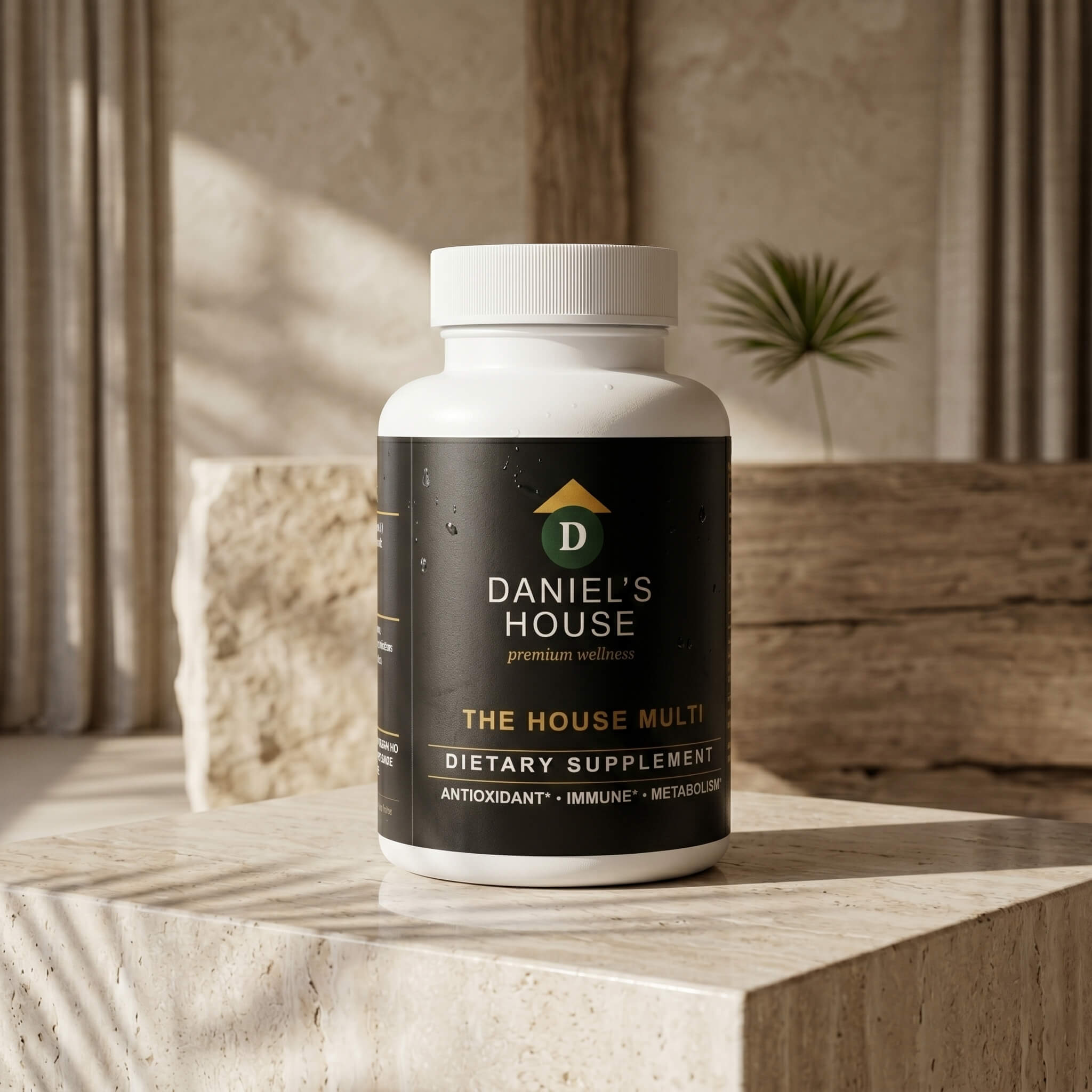
Antioxidant · Immune · Metabolic
The House Multi
Your daily nutritional foundation. Every essential vitamin and mineral, plus an antioxidant fruit blend and immune-supporting botanicals — properly dosed in two morning capsules.
$32.90
View Details →
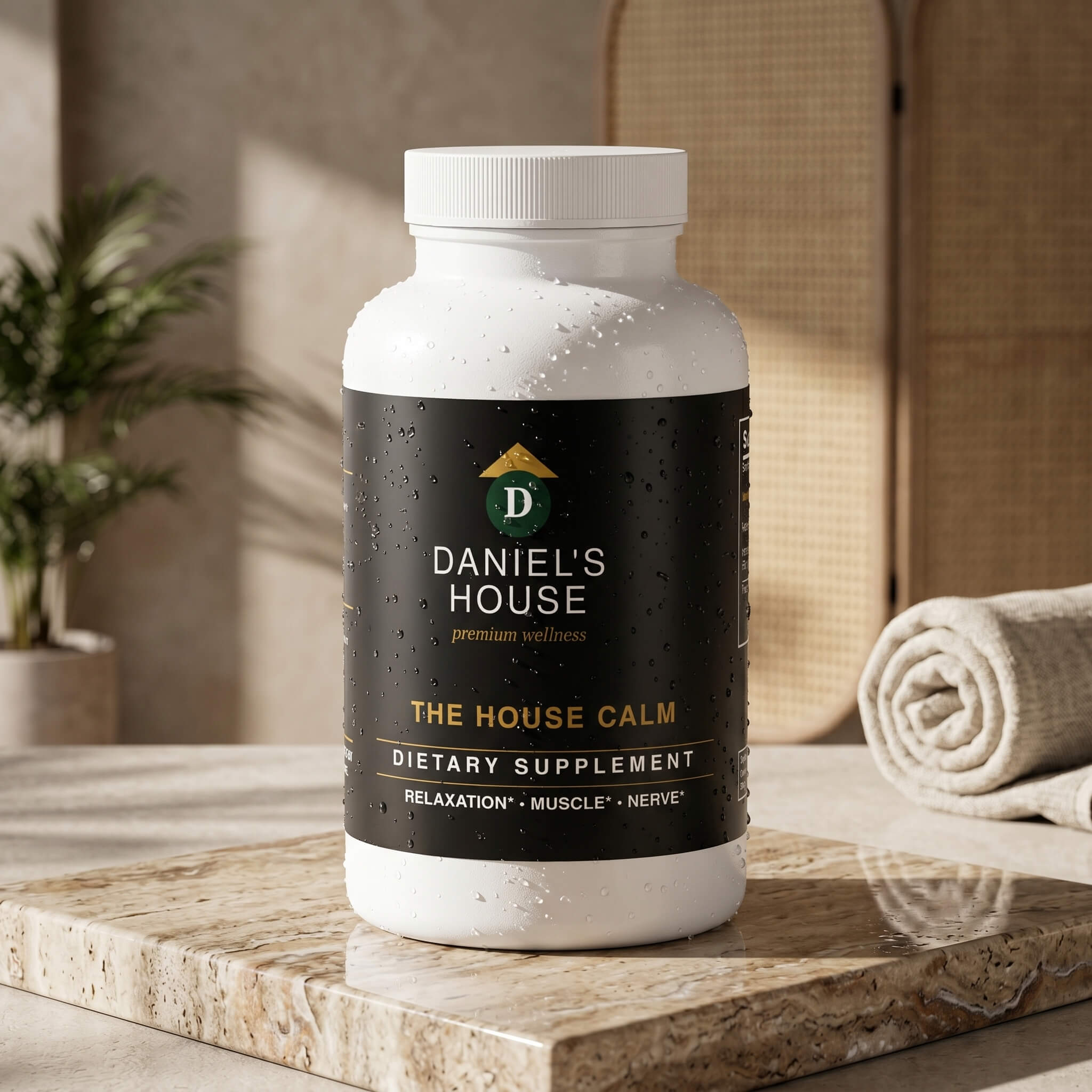
Relaxation · Muscle · Nerve
The House Calm
Sleep deeper. Stress less. 275mg of well-absorbed magnesium glycinate per serving — the form your nervous system can actually use without the laxative side effects.
$26.90
View Details →
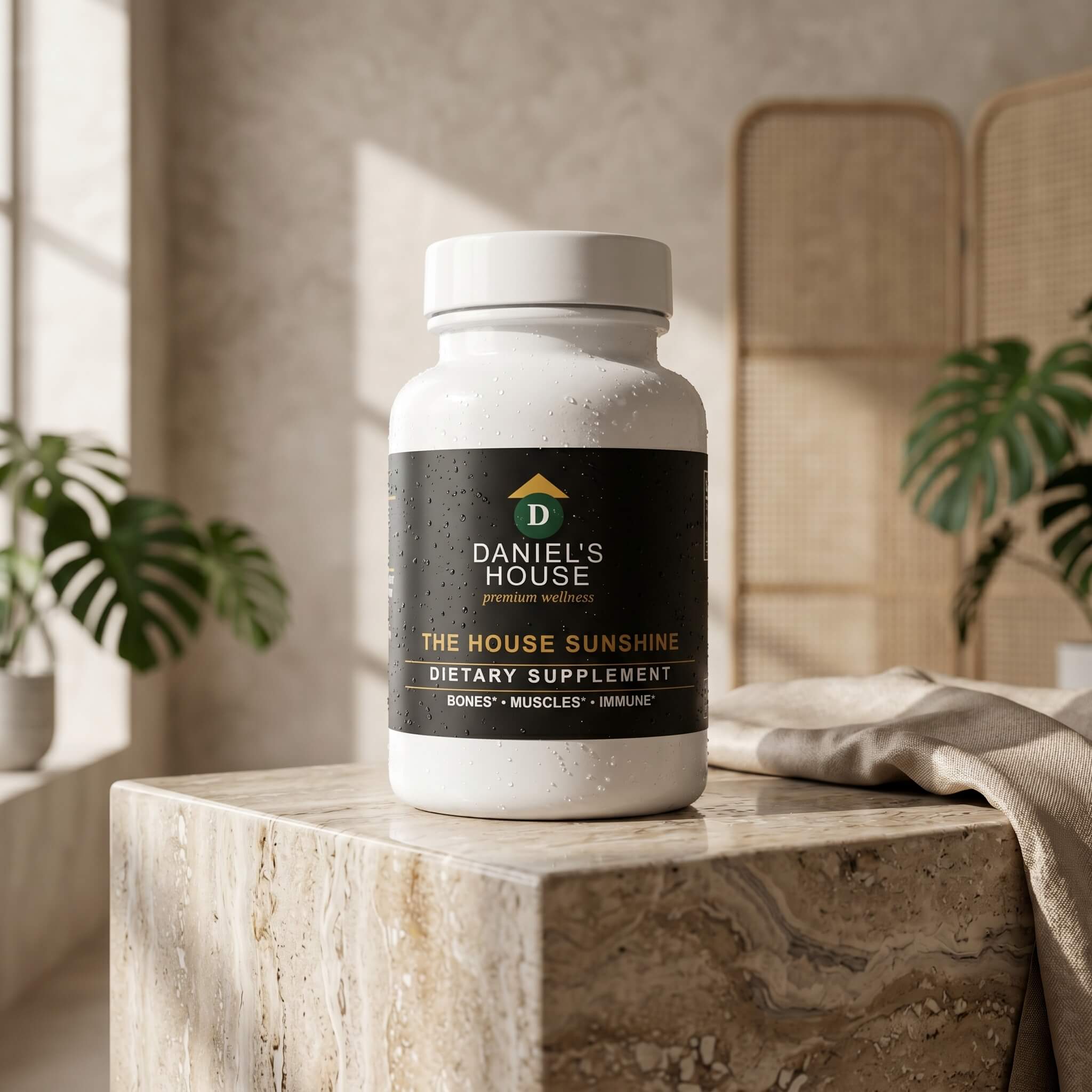
Bones · Muscles · Immune
The House Sunshine
The vitamin your body craves. Fat-soluble D3 cholecalciferol in a clean softgel, properly dosed for bone density, immune balance, and the energy you forgot was missing.
$19.90
View Details →
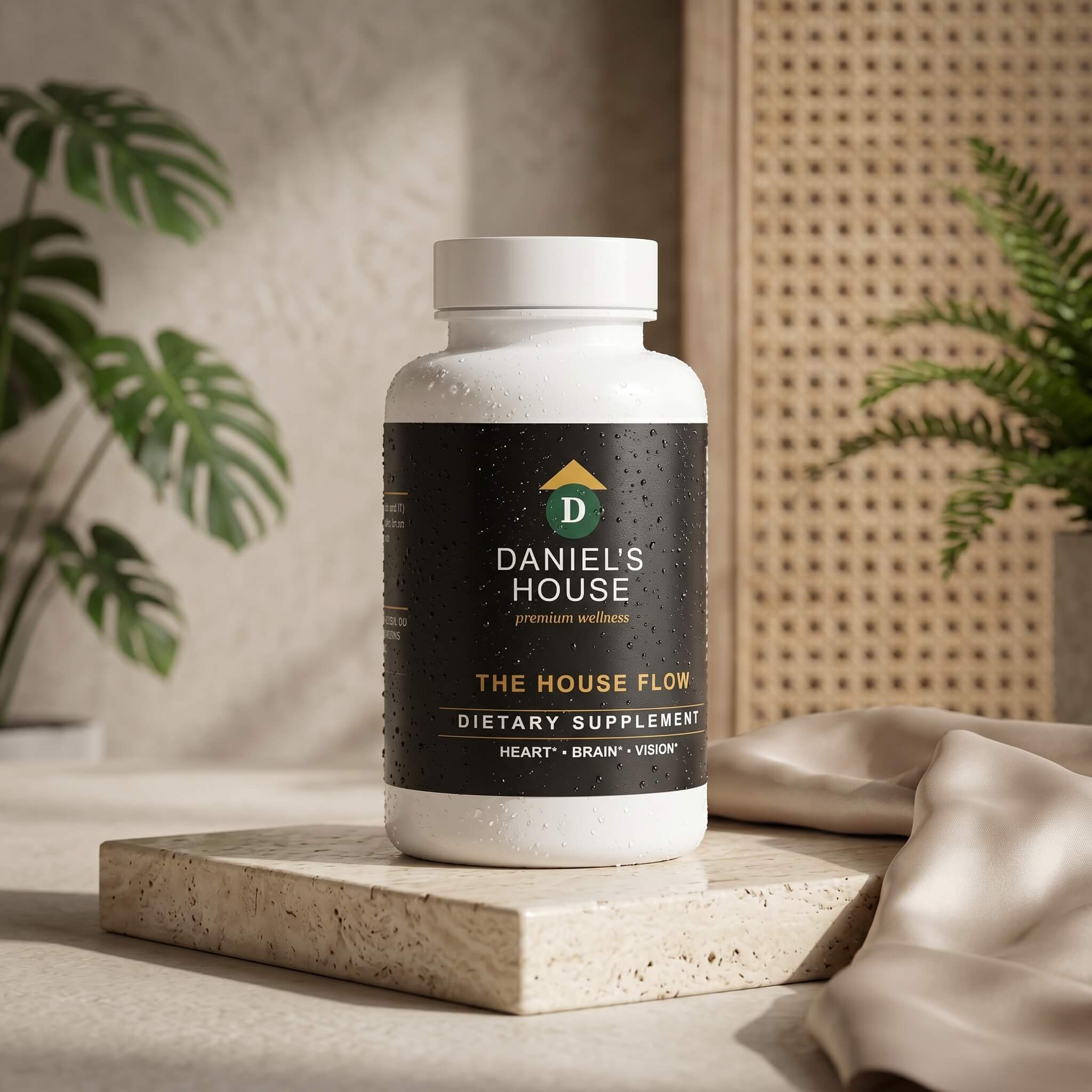
Heart · Brain · Vision
The House Flow
Heart, brain, and joints — daily. 1000mg of fish oil concentrate with targeted EPA and DHA in a clean softgel. No fishy aftertaste, no burp-back.
$24.90
View Details →
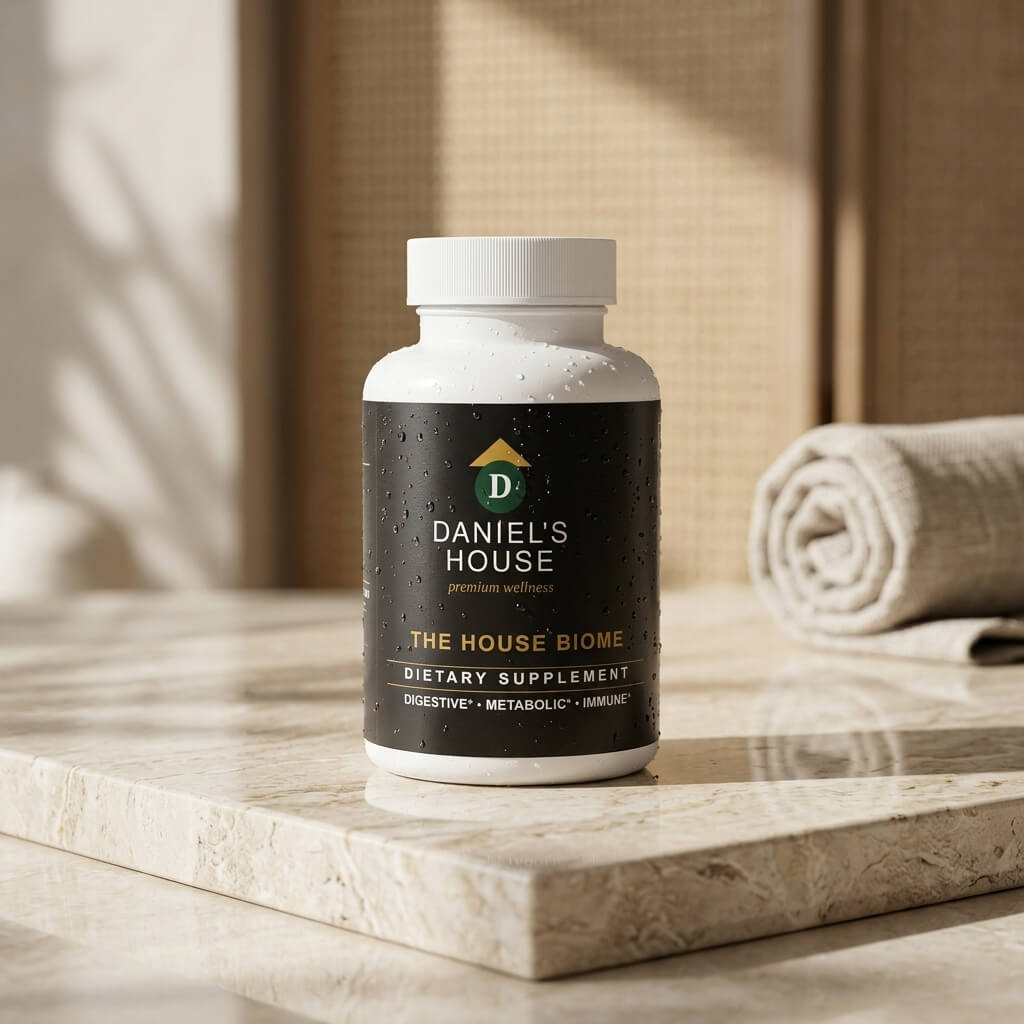
Digestive · Metabolic · Immune
The House Biome
Balance starts within. Four-strain probiotic blend at 40 billion CFU with MAKTREK® Bi-Pass technology to survive stomach acid — for the gut you almost forgot about.
$30.90
View Details →
The Longevity
Age better, live longer · 5 Bottles
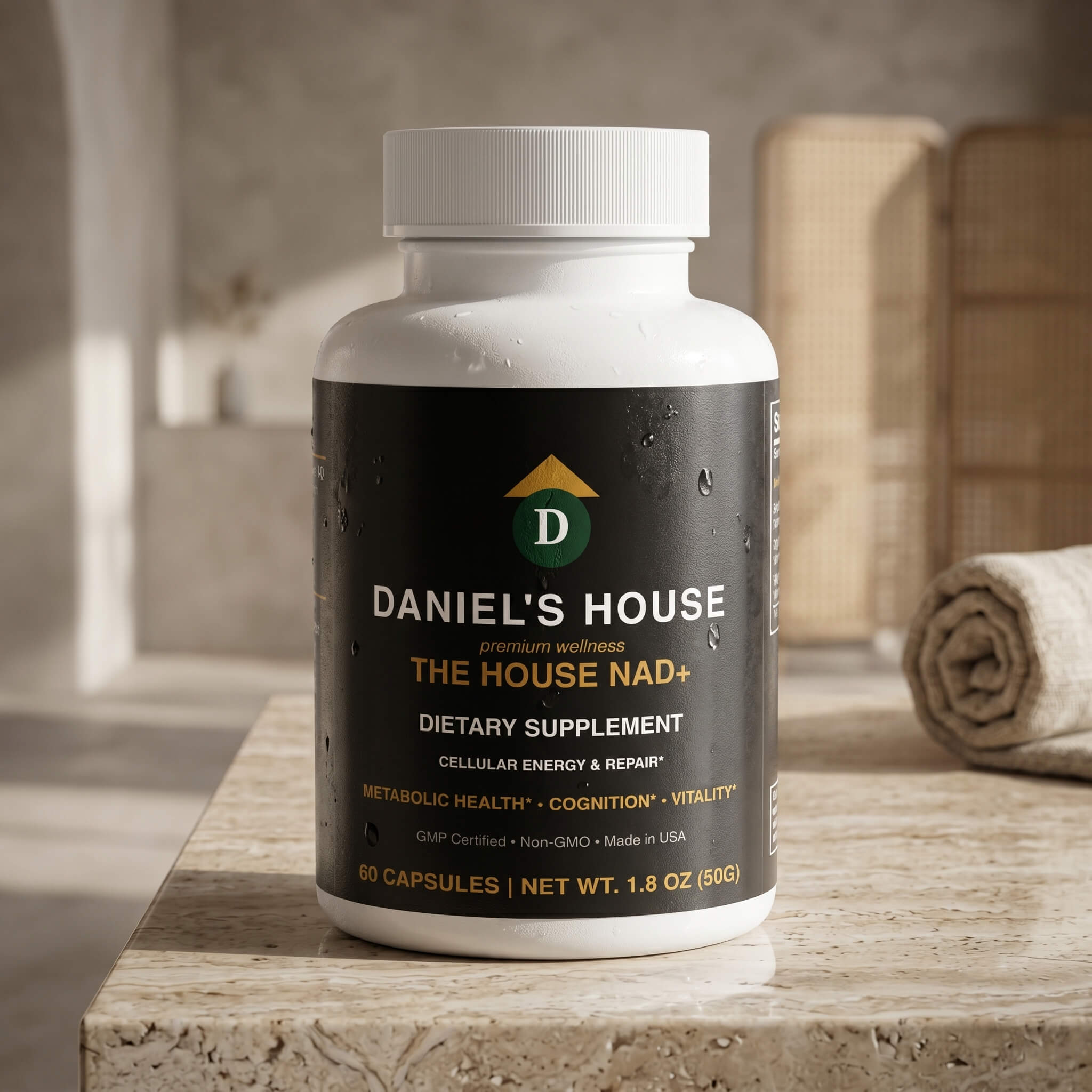
Metabolic · Cognition · Vitality
The House NAD+
Cellular energy and DNA repair. 500mg NAD+ stacked with quercetin and 98% trans-resveratrol from Japanese knotweed — premium longevity science, properly dosed.
$60.00
View Details →
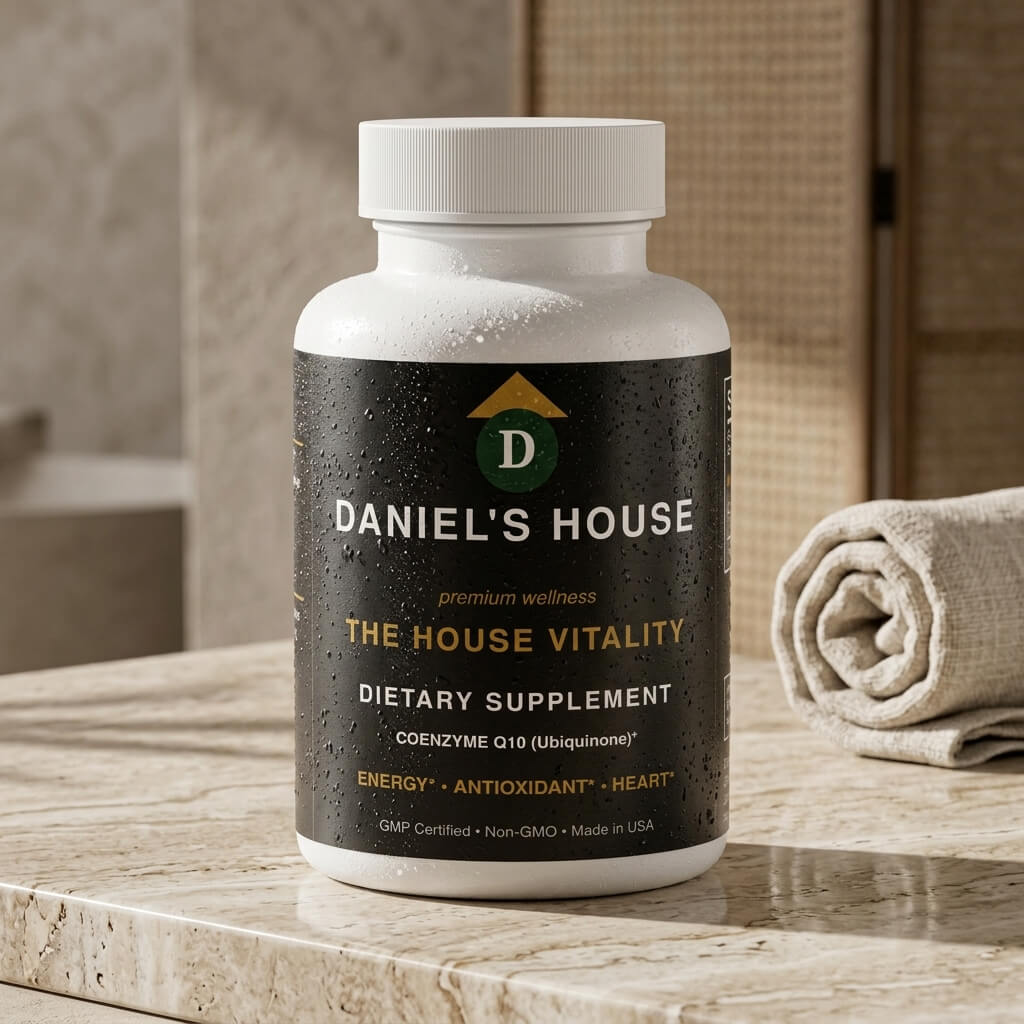
Energy · Antioxidant · Heart
The House Vitality
Fuel your cells from within. 200mg of CoQ10 ubiquinone per capsule for cellular energy production and heart health — the supplement your forties will thank you for.
$28.90
View Details →
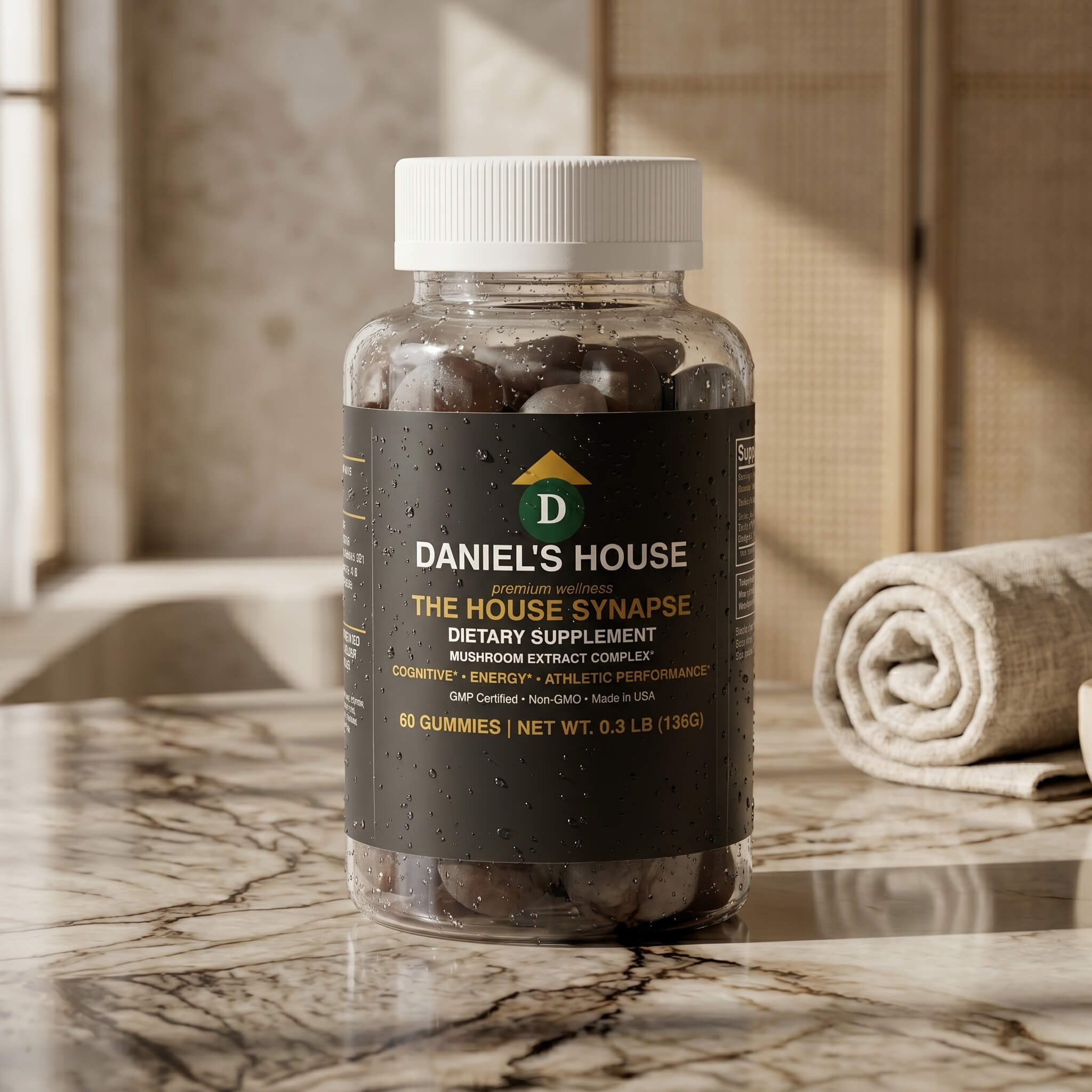
Cognitive · Energy · Performance
The House Synapse
Focus, clarity, and adaptogenic power. Ten-mushroom extract complex — Lion's Mane, Reishi, Cordyceps, Chaga, Turkey Tail and more — in a daily gummy.
$34.90
View Details →
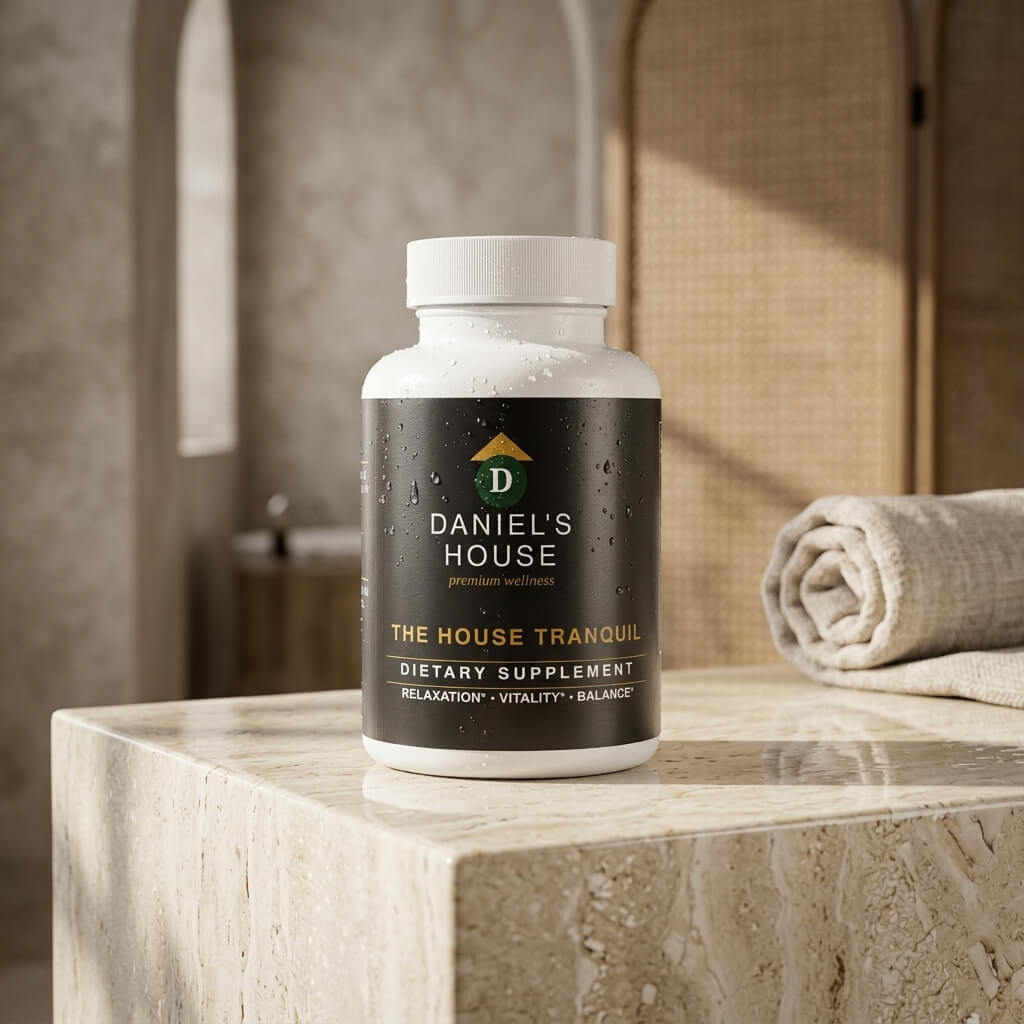
Relaxation · Vitality · Balance
The House Tranquil
Stress resilience meets hormonal balance. KSM-66® ashwagandha stacked with maca, ginseng, shatavari, and L-arginine — for stress that won't quit and energy that lasts.
$29.50
View Details →
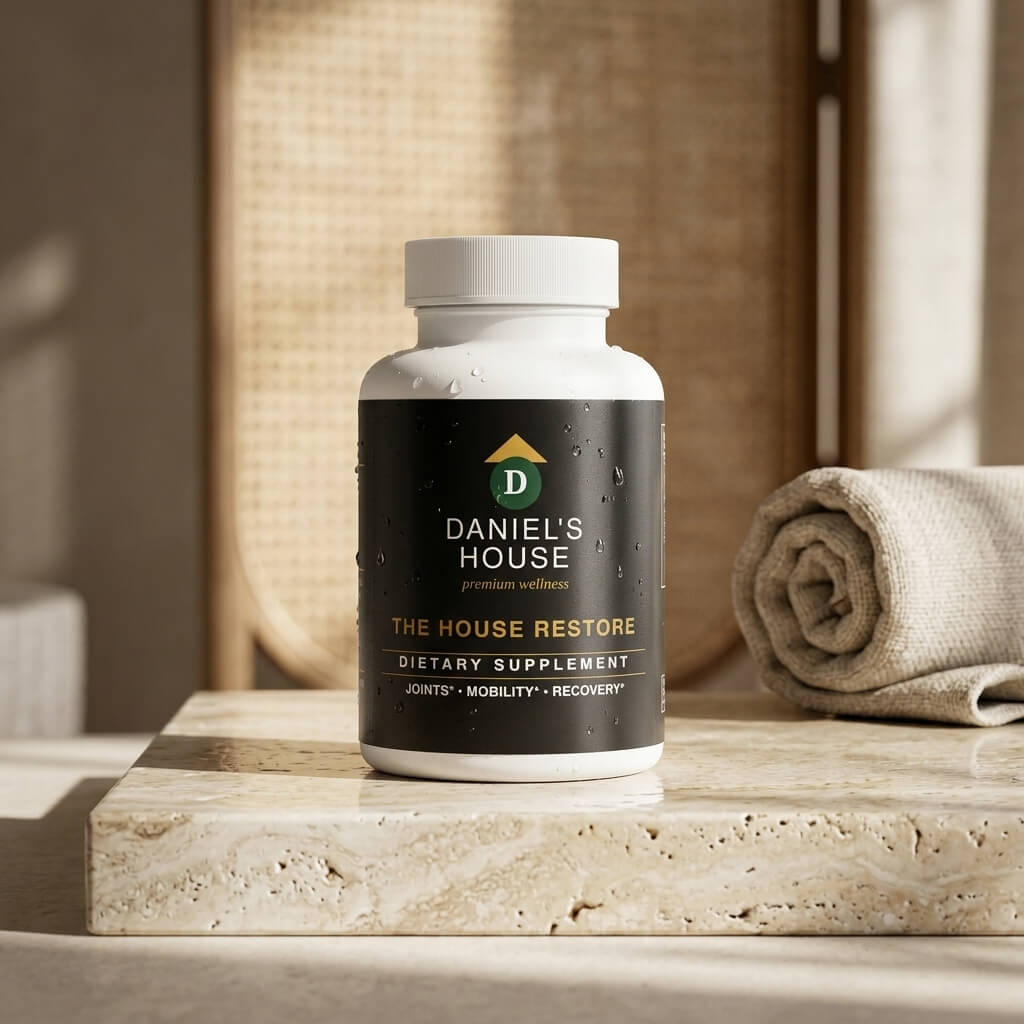
Joints · Mobility · Recovery
The House Restore
Inflammation's natural opponent. Platinum turmeric complex with glucosamine, boswellia, chondroitin, MSM, and BioPerine® for absorption — the classic stack, properly built.
$25.90
View Details →
Daniel's Daily Bundle
$315
$258
Save $57 · 18% off
Train Harder · Recover Faster
The Workout Stack
Five formulations for the days you put in real work. Strength, output, recovery, and the metabolic support to keep showing up.
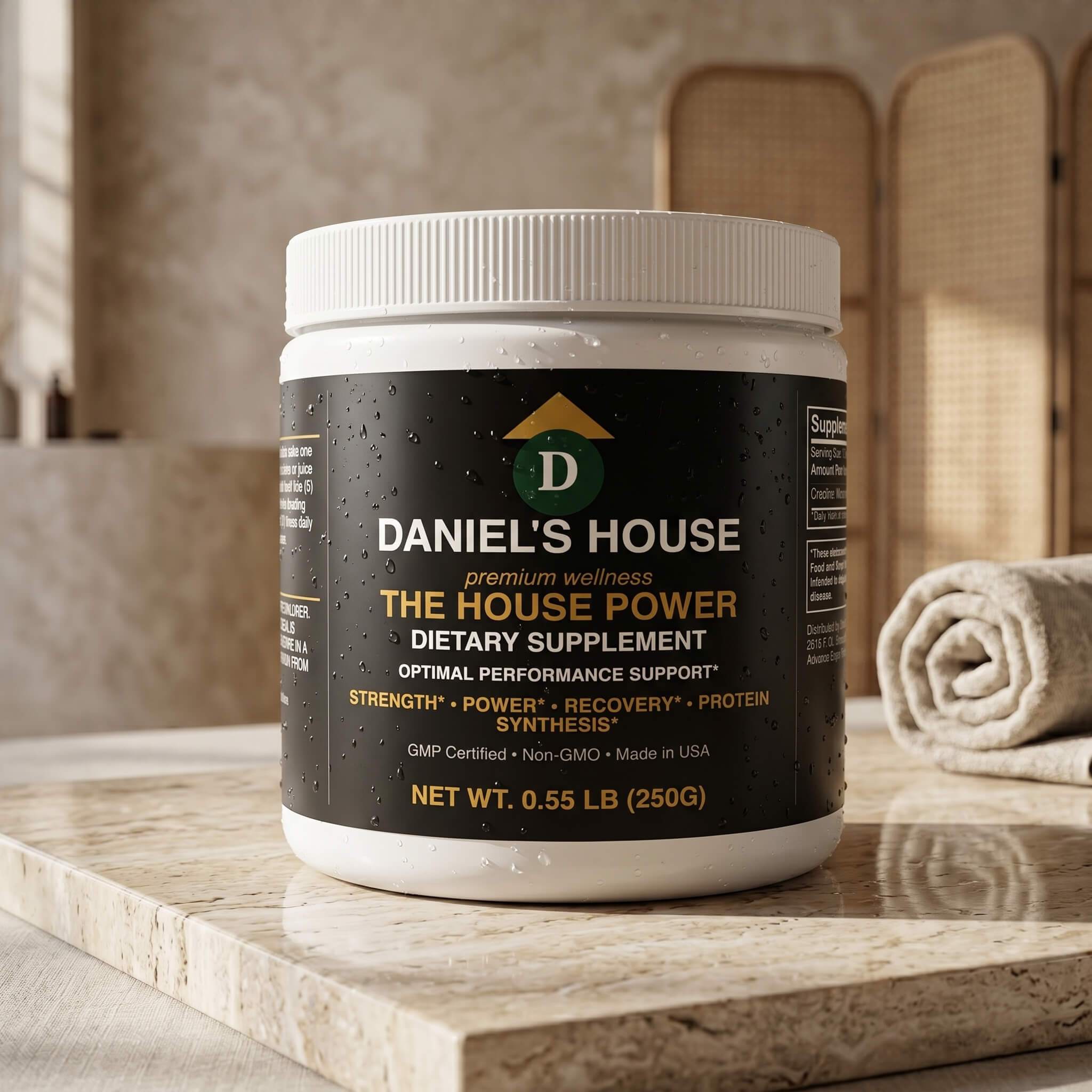
Strength · Power · Recovery · Growth
The House Power
Strength, muscle, and performance. 5g of pharmaceutical-grade creatine monohydrate per scoop — the most-studied supplement on the shelf, no flavors, no nonsense.
$33.90
View Details →
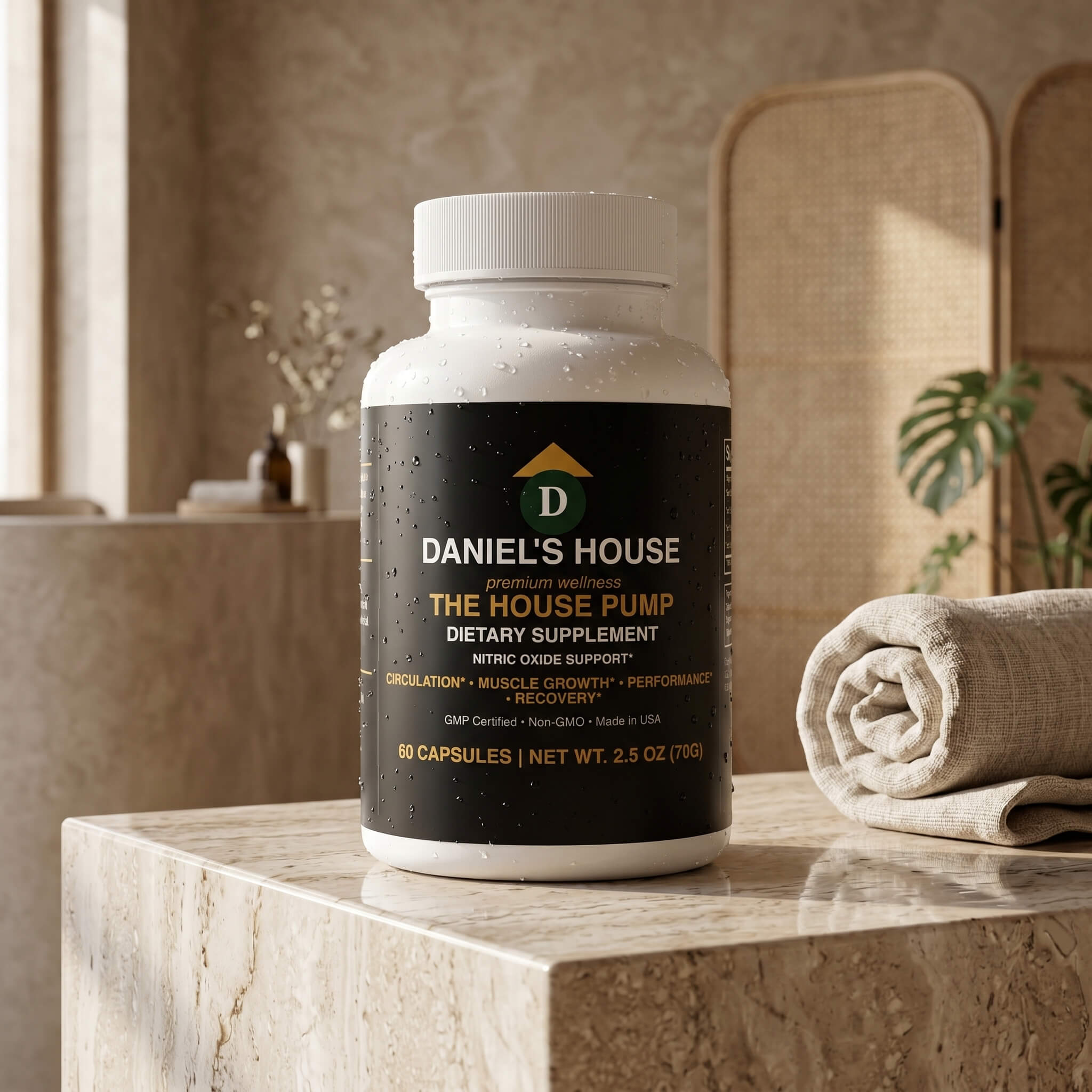
Circulation · Muscle · Performance
The House Pump
Blood flow, vascularity, and output. L-Citrulline DL-Malate, L-Arginine HCl, and L-Arginine AKG for nitric oxide support — pre-workout, but smarter and stim-free.
$39.99
View Details →
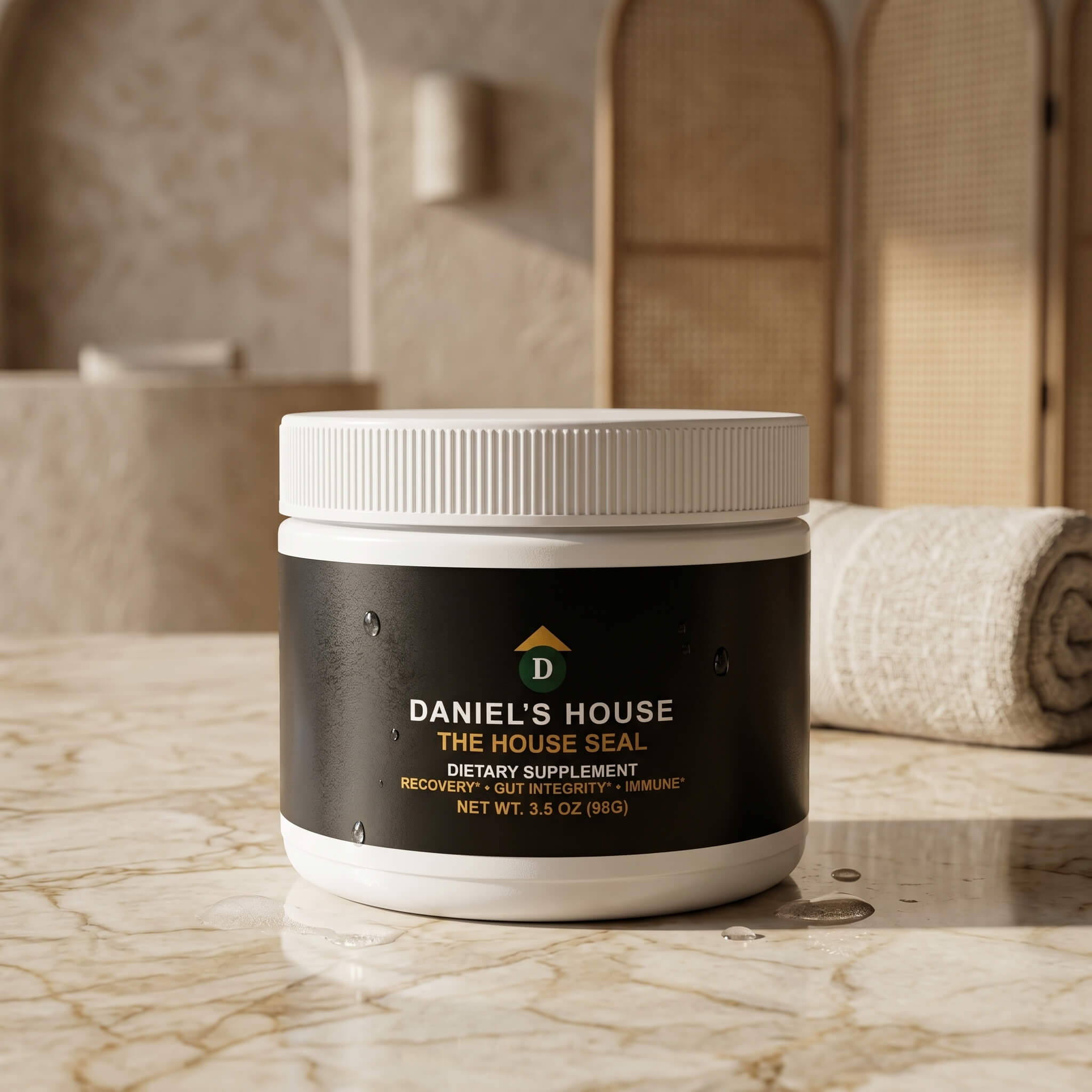
Recovery · Gut Integrity · Immune
The House Seal
Gut repair meets muscle recovery. 3.15g of pure L-glutamine per scoop for gut lining support and post-training repair. Stir into water, get on with it.
$29.90
View Details →
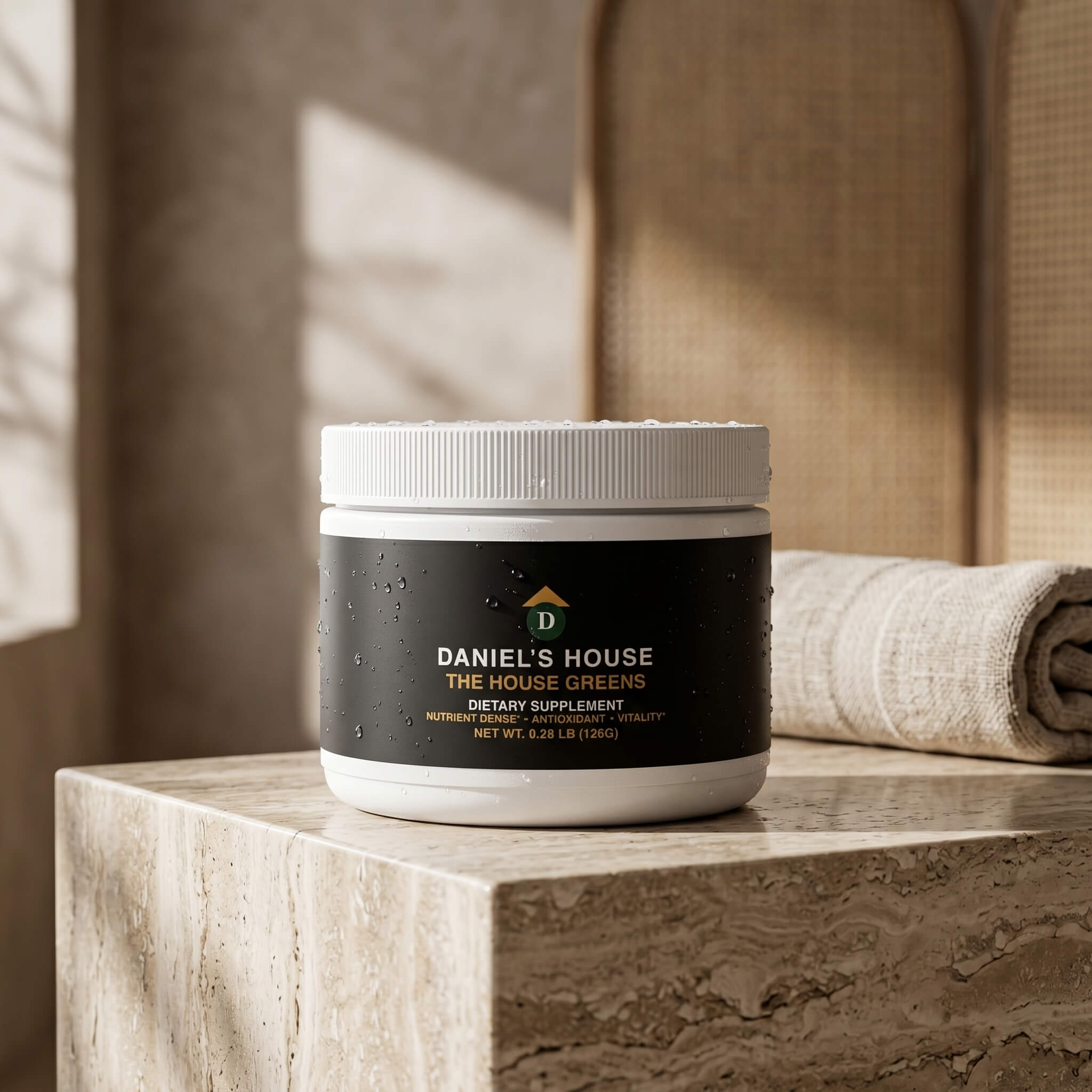
Nutrient Dense · Antioxidant · Vitality
The House Greens
A full serving of vitality. 22-ingredient superfood blend — barley grass, spirulina, beet, acai, ashwagandha, ginseng, ginger and more — in one daily scoop.
$35.90
View Details →
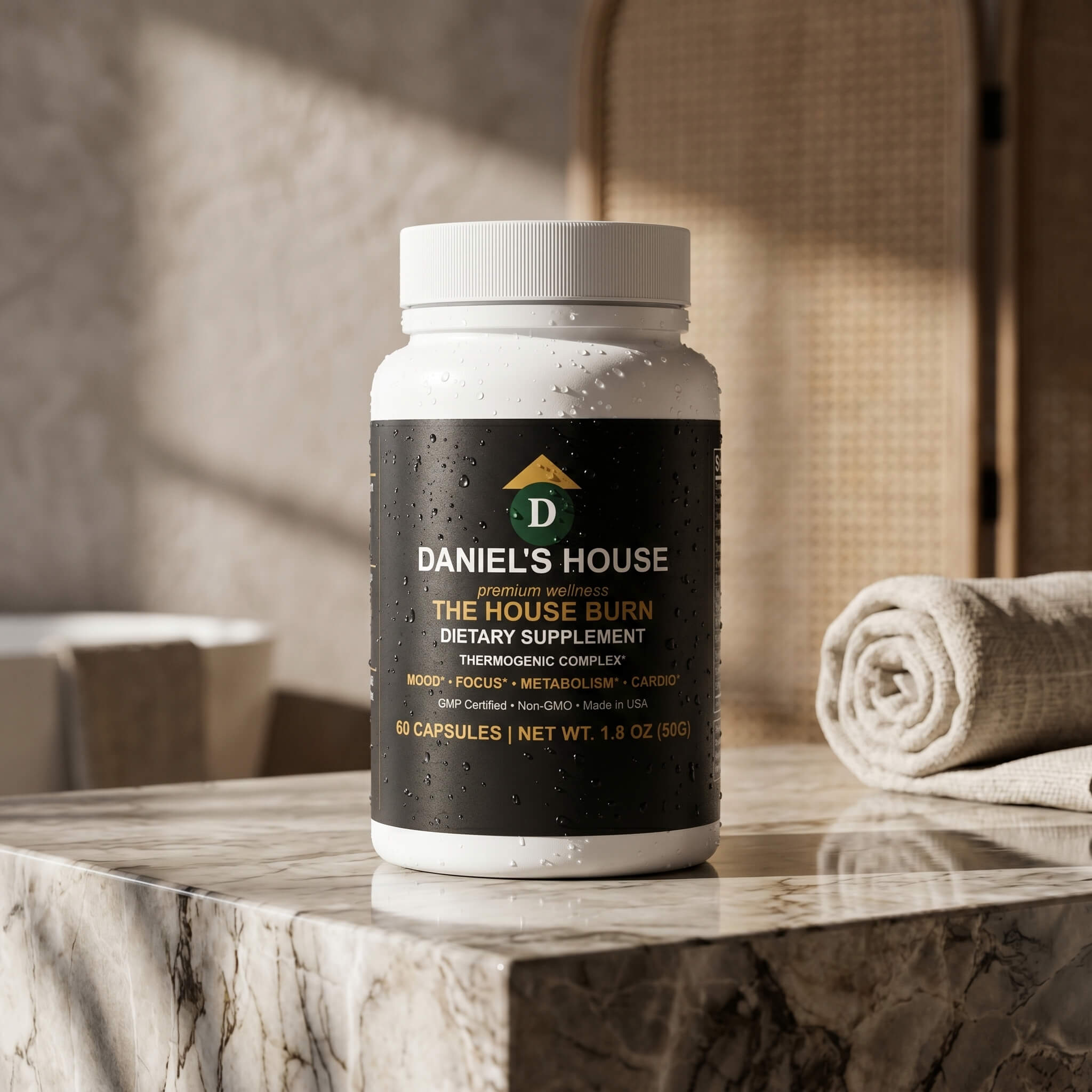
Mood · Focus · Metabolism · Cardio
The House Burn
Heat up the engine. Thermogenic complex stacked with mood, focus, and cardiovascular support — for the days you need to dial up metabolism without sacrificing mental clarity.
$33.90
View Details →
The Workout Bundle
$174
$148
Save $26 · 15% off
Glow From Within · Sharpen The Mind
The Beauty + Focus Stack
Three formulations for the way you show up. Hair, skin, nails, and a sharper edge — the supplements that handle the visible parts of feeling well.
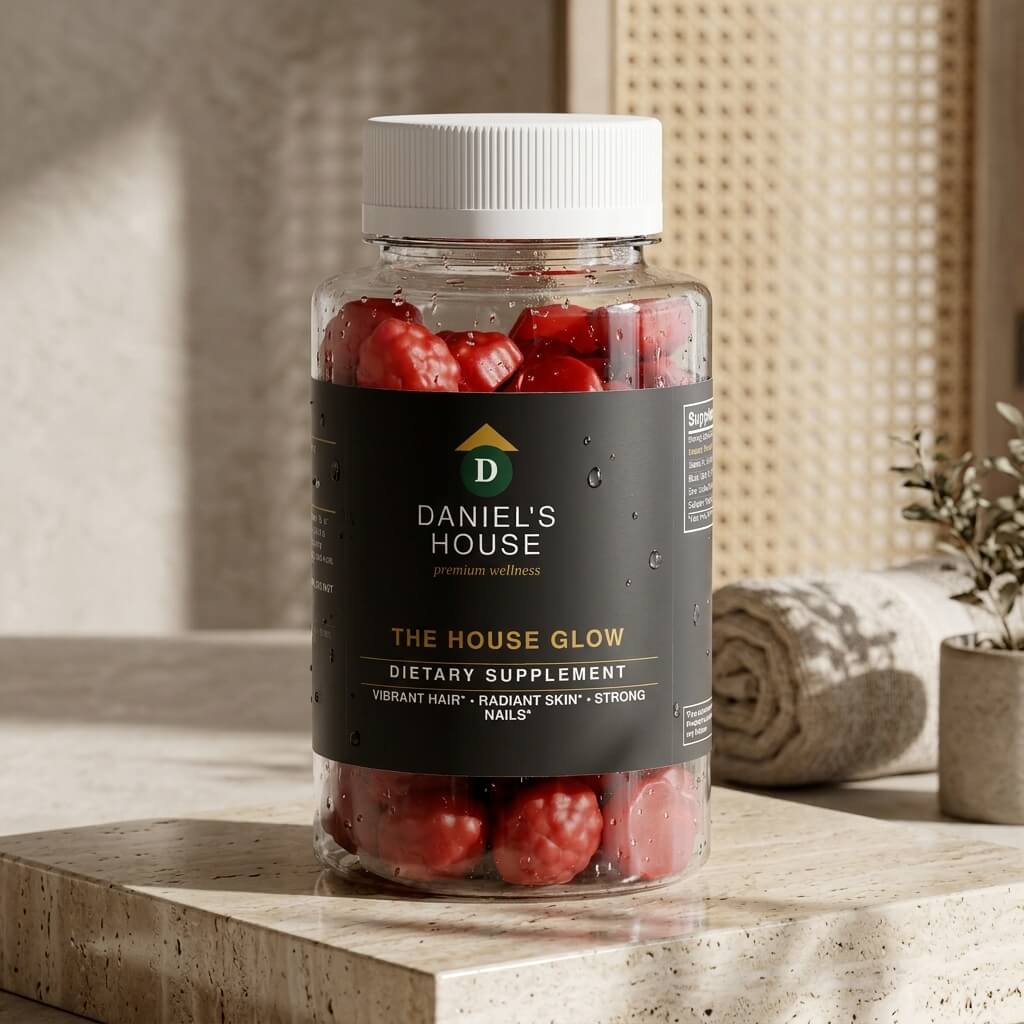
Vibrant Hair · Radiant Skin · Strong Nails
The House Radiance
Beauty you can taste. Vitamins A/C/D/E with biotin, B-complex, zinc, iodine, folate, and marine collagen — in a passion-fruit gummy you'll actually take.
$34.90
View Details →
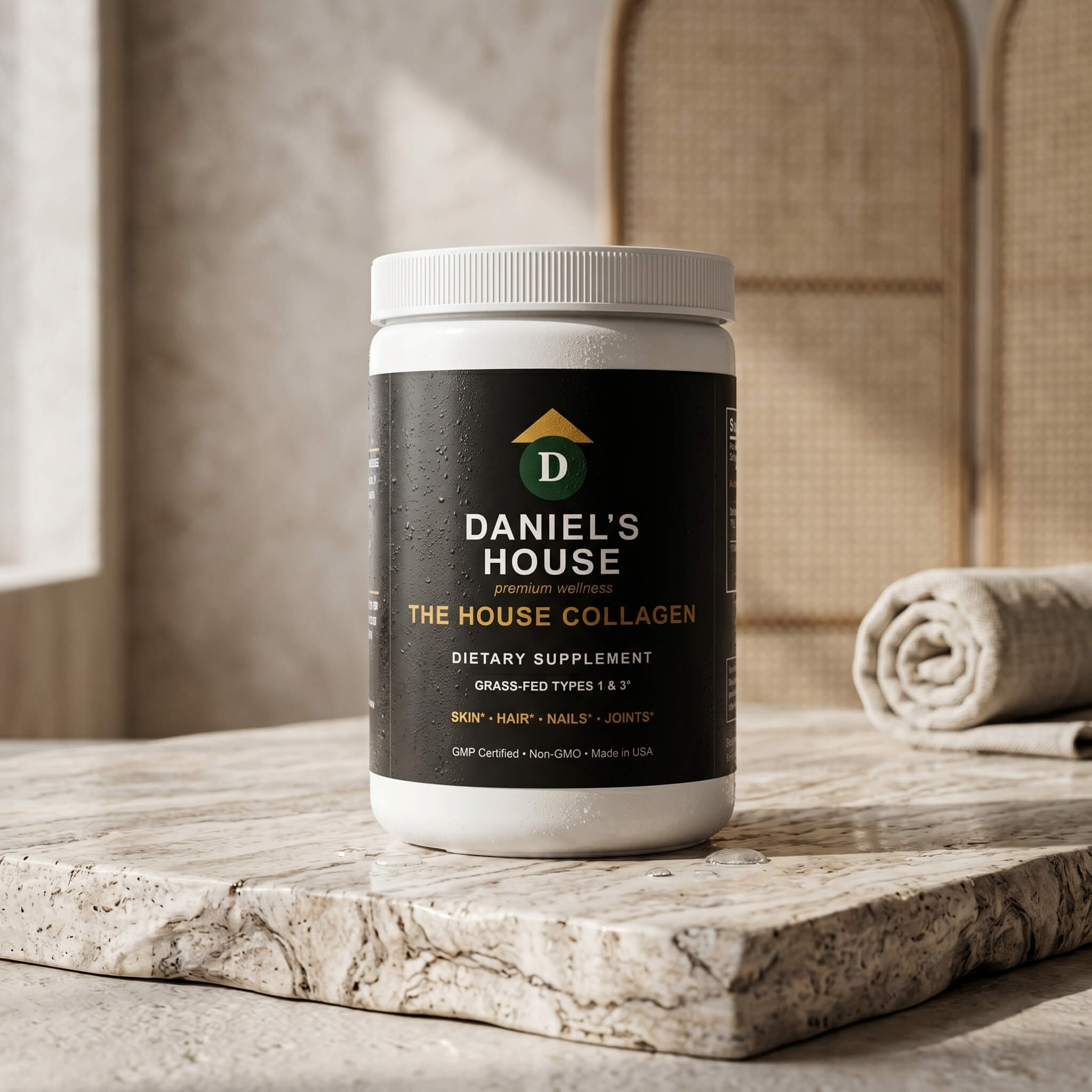
Skin · Hair · Nails · Joints
The House Collagen
Firm skin, strong joints, daily. 10g of grass-fed bovine hide collagen peptides per scoop, types I & III. Unflavored, dissolves clean in coffee, cooking, anything.
$33.90
View Details →
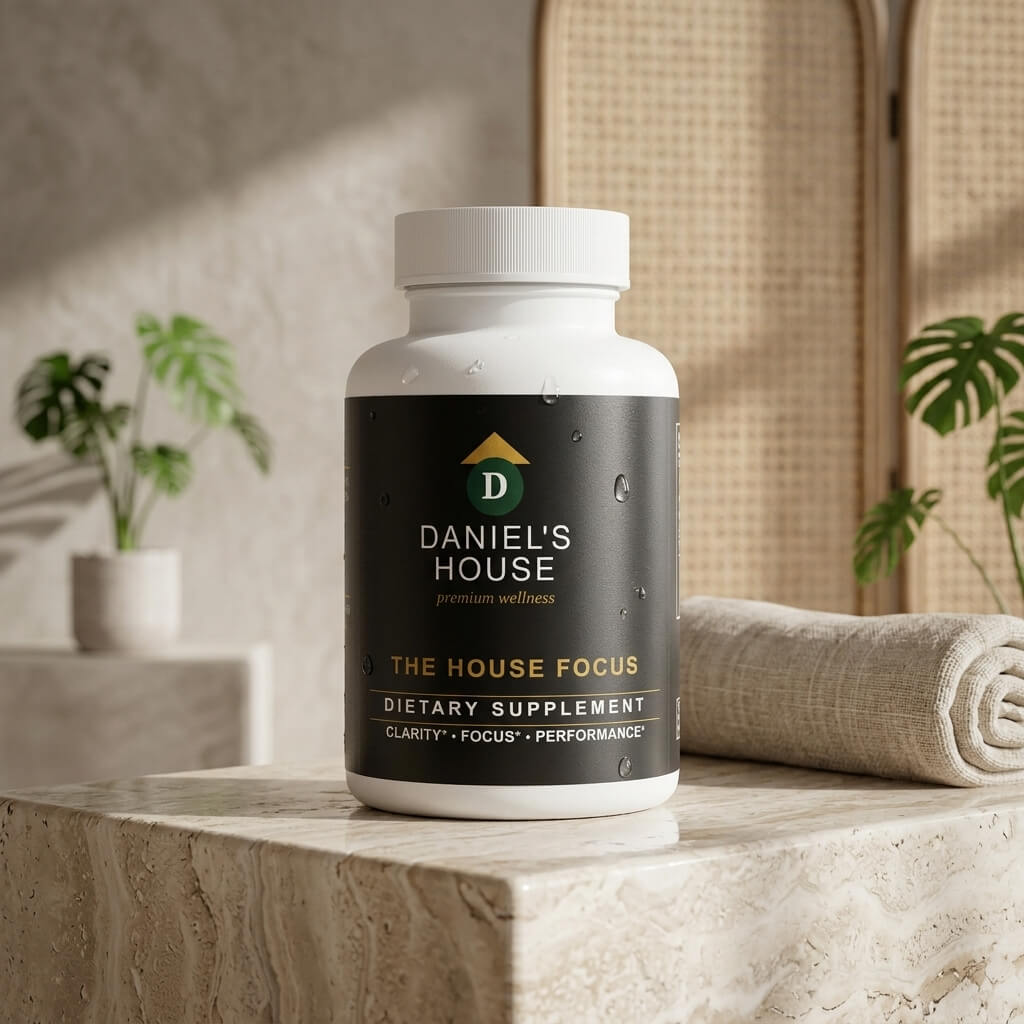
Clarity · Memory · Performance
The House Focus
Clarity, memory, and mental edge. Nootropic blend of GABA, L-Tyrosine, Bacopa monnieri, Alpha GPC, and Huperzine A with B6 — for focus that doesn't fade by 3pm.
$29.90
View Details →
The Glow Bundle
$207
$176
Save $31 · 15% off
Built on Research · Not Marketing
What the Science Says
About These Actives.
About These Actives.
Every active in the Daniel's House line has peer-reviewed evidence behind it. Here's a sample of what the most current research shows.
Study 01
Creatine Monohydrate
A 2024 systematic review and meta-analysis of 16 randomized controlled trials confirmed that creatine monohydrate supplementation produces measurable benefits for memory, attention, and information processing speed — adding to decades of evidence for muscle and strength gains. The most-studied supplement on the shelf, with good reason.
Source: Frontiers in Nutrition, 2024 — systematic review & meta-analysis (Xu et al.).
Found in: The House Power
Study 02
KSM-66® Ashwagandha
A 2025 systematic review and meta-analysis of 15 randomized controlled trials covering 873 patients found ashwagandha supplementation produces significant reductions in cortisol, stress, and anxiety versus placebo. KSM-66® is the most-studied standardized extract.
Source: BJPsych Open, 2025 — systematic review & meta-analysis (Bachour et al.).
Found in: The House Tranquil · The House Greens
Study 03
Magnesium Glycinate
Magnesium glycinate is the chelated form clinically associated with improved sleep quality, reduced stress markers, and better absorption than oxide or citrate. Around half of US adults fall short of the recommended daily intake — supplementation closes a real gap.
Source: Reviewed in Nutrients (multiple), and the NIH Office of Dietary Supplements.
Found in: The House Calm
Study 04
Vitamin D3 (Cholecalciferol)
Vitamin D3 supplementation has decades of clinical evidence supporting bone density, immune balance, and mood regulation. An estimated 35% of US adults are deficient — a gap that supplementation reliably closes when taken consistently with a fat source for absorption.
Source: Reviewed in JAMA, The Lancet, and the NIH Office of Dietary Supplements.
Found in: The House Sunshine · The House Multi · The House Radiance
Study 05
Omega-3 EPA + DHA
Long-chain marine omega-3s (EPA and DHA) are among the most-studied supplements in nutrition science. Clinical trials consistently associate adequate intake with cardiovascular benefits, reduced inflammatory markers, and cognitive support — particularly when paired with a low-omega-6 diet.
Source: Reviewed in Circulation, JAMA, and meta-analyses across 100,000+ participants.
Found in: The House Flow
Study 06
NAD+ Precursors
NAD+ levels decline with age, and emerging clinical research suggests precursor supplementation can increase cellular NAD+ levels and support energy metabolism. Combined with antioxidants like resveratrol and quercetin, the stack targets cellular health at its most fundamental level.
Source: Reviewed in Cell Metabolism (Imai & Guarente) and ongoing trials at Harvard, Washington University.
Found in: The House NAD+
Research summarized above examines individual supplement ingredients and active compounds in published clinical studies. Daniel's House products contain these actives at supplemental doses and are not intended to diagnose, treat, cure, or prevent any disease. These statements have not been evaluated by the Food and Drug Administration. Individual results vary. Consult a healthcare professional before starting any new supplement, especially if pregnant, nursing, taking medication, or under 18.
Or — let us build the stack for you.
The Complete Daily System bundles all ten Daily supplements in the order you'll take them. Foundation in the morning. Longevity with breakfast. One transformation. Boxed.
Explore Bundles →